
And the Oscar Goes To...
Winning Best Actor in someone else's story

“The third spear carrier from the left should act as if the play is all about the third spear carrier from the left.”
— Sir Laurence Olivier
In 1992, something rare happened at the Academy Awards, a moment that holds the keys to successful investing, and a deeper secret to meaningful living.
To understand why, let’s rewind.
Laurence Olivier was renowned for his work on the stage, helping shape modern British theater in London’s West End, before turning his attention to film. One of the most celebrated actors of the twentieth century, he received an Honorary Academy Award in 1947 for Henry V, recognizing his achievement as actor, director, and producer, and then won the Oscar for Best Actor in 1949 for Hamlet.
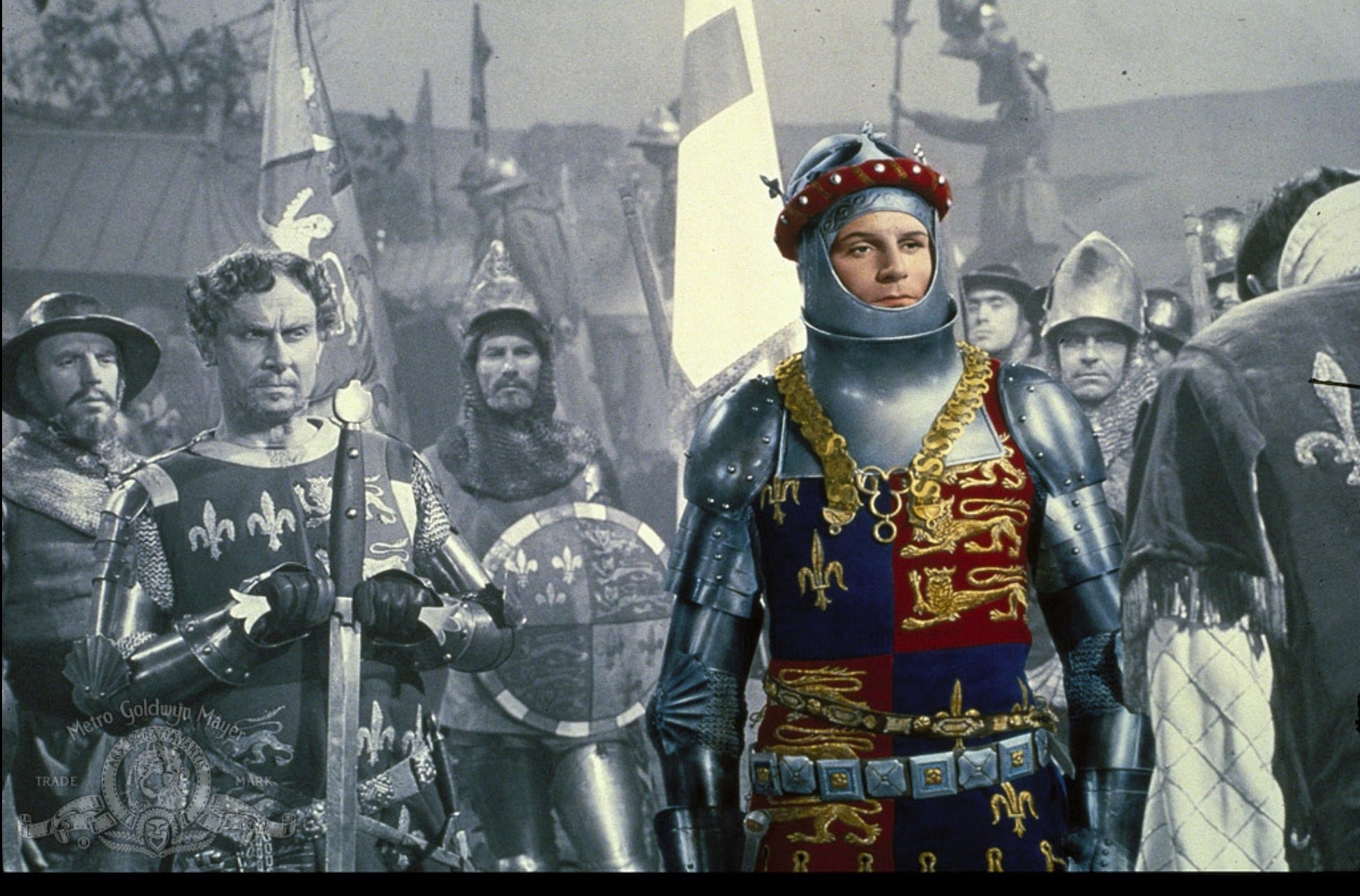
Olivier treated acting as a discipline, not a temperament. He obsessively marked up scripts and planned movements with surgical precision. Yet something less visible, but more important, sustained Olivier’s success: humility. The man who rose quickly to center stage as Romeo, Hamlet, and Richard III understood that the production was larger than himself. Even before becoming a director, Olivier held a reverence for the whole, recognizing that the collective effort gives each role its meaning. He cautioned that the moment the central figure believed the stage existed to serve them, the entire performance began to thin.
In the early 1960s, a young Welsh actor, Anthony Hopkins, joined Olivier at the Royal National Theater in London. Eager and deeply serious about the craft, Olivier took Hopkins under his wing, becoming both mentor and model. Hopkins absorbed Olivier’s devotion to preparation, discipline, and technical mastery. Like Olivier, he embraced humility, but he accessed it through vulnerability shaped by insecurity and self-doubt.
As film rose to prominence for the generation that followed Olivier, Hopkins recognized that the camera didn’t reward effort in the same way the stage did. What played as power in a theater could register as excess on screen. In response, Hopkins cultivated restraint. He embraced silence and mastered stillness. Through a held breath, an unblinking gaze, or a perfectly timed pause, he evoked emotion and created tension that lines of a script could never deliver. “The less you show,” Hopkins said, “the more you allow the audience to do the work.”
Hopkins was the consummate role player, building a foundation of excellence alongside giants like Hepburn, Connery, and Hackman. Yet, after two decades, he still hadn’t broken through to the lead roles that define a career. “I have resigned myself to becoming a respectable actor in London’s West End and the BBC for the rest of my life,” he remarked.
Even so, Hopkins kept at his craft, continuing to hold his spear as if it were all that mattered. In 1991, the ground shifted. He was cast as Hannibal Lecter in The Silence of the Lambs. A young FBI trainee, Clarice Starling, played by Jodie Foster, is assigned to interview the brilliant but imprisoned psychiatrist in hopes Lecter will help her catch another killer known as “Buffalo Bill.” A psychological cat-and-mouse game unfolds between two locked minds, where power shifts not through action, but through restraint and what isn’t said.
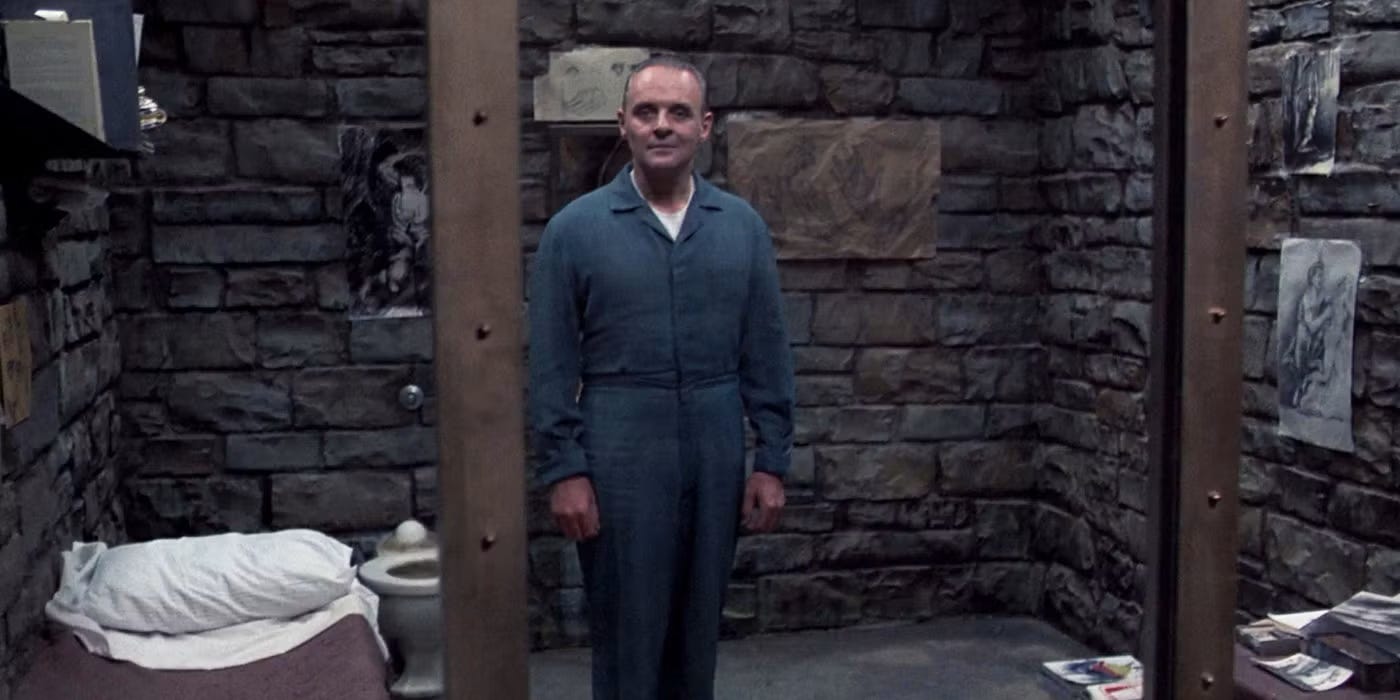
Even though Hopkins appears on screen for only sixteen minutes of the film’s 118-minute runtime, he never loses sight of Olivier’s charge: to act as if the film is all about him. He barely moves. He rarely blinks. He pulls everything inward and bends the room toward him. His stillness becomes more predatory than his rage ever could. Audiences are left to wonder: was Hopkins playing Lecter, or was Lecter playing Hopkins?
Turns out Hopkins and Olivier would have been fabulous investors.
Like acting, investing begins with humility, and the quiet admission that we can’t reliably know where returns will materialize, or when.
With the script in hand, actors work with what is known: a third spear carrier will always be a third spear carrier. But capital markets are unscripted. Markets lurch without warning, pulling supporting actors from the wings to the center while sending leading actors into the shadows.
That’s why the job isn’t to predict who will lead. It’s to fund the ensemble by casting a wide net across asset classes, company sizes, and geographies, bringing thousands of companies into a portfolio. Time and again, the least expected holdings take the lead while others support, waiting their turn.
If humility builds the portfolio, discipline sustains it. It’s maintaining commitment when the role players are out of favor. It’s devotion to the whole. And restraint prevents us from trading on temperament, while stillness, amid the chaos, gives compounding room to do its quiet work.
For a decade, the spotlight barely left America. Large caps played the lead, taking the lion’s share of attention. And within large caps, the Magnificent Seven stole the show, sweeping awards year after year and luring investors into believing the broader ensemble no longer mattered.
Then came 2025.
The global investing stage spun. The spotlight swung.
The lead shifted, and the applause moved.
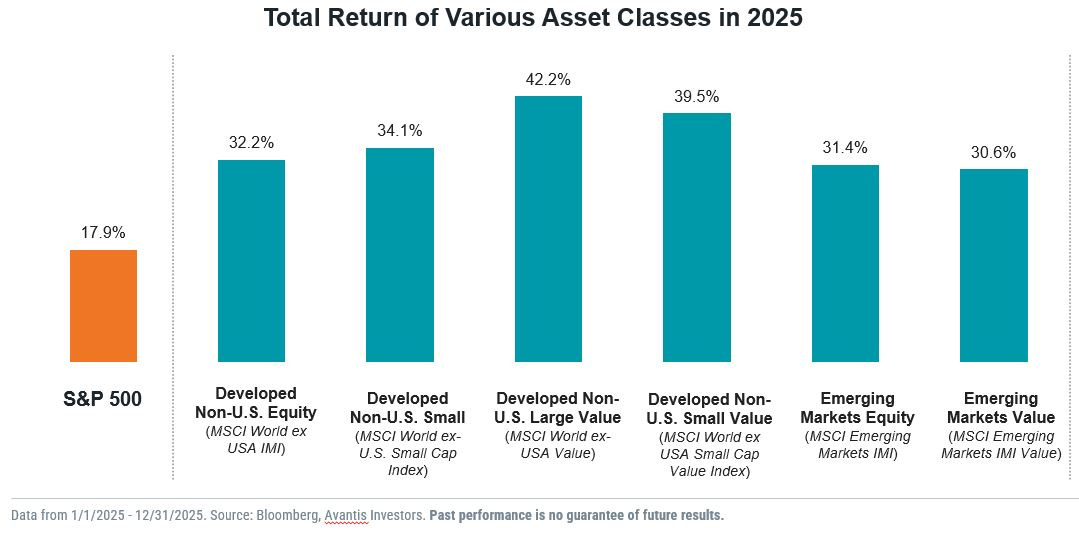
After years in the shadows, the international ensemble—the “spear carriers” from Europe, Asia, and emerging markets—was thrust to center stage. Just as Hopkins was when the script arrived, these underappreciated role players held their spears, outperforming their U.S. counterparts by one of the widest margins since the early 1990s—when Hopkins played Lecter.
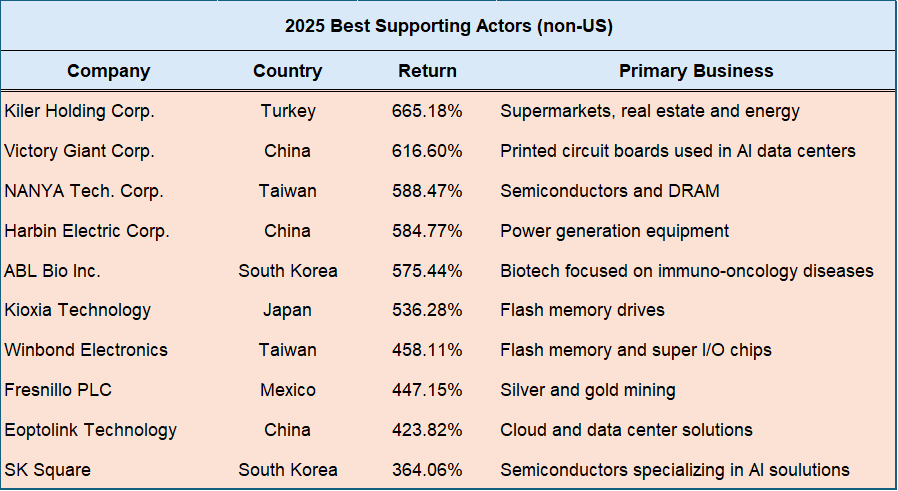
The best supporting actors weren’t the big names, or the usual suspects. They were the tiniest spear carriers in the ensemble. Companies investors would have missed entirely if they hadn’t cast the net wide. Companies committed to their craft, to playing their part, to waiting their turn to contribute outsized returns.
When the Academy Awards were presented in 1992, the industry witnessed something rare. Despite appearing on screen for only sixteen minutes of a two-hour film, Anthony Hopkins took home not the Oscar for Best Supporting Actor, but the Oscar for Best Actor.
In a global portfolio, international equities are cast in a similar role, with about 30% of the “screen time”. In the great rotation of 2025, this ensemble delivered a masterful performance, proving, like Hopkins, that a supporting role can steal the show.
And the longer I’ve lived, the more I’ve come to believe the real story isn’t about who leads. It’s about who loves.
The Actors of Ourselves
We all live, in some sense, as the leading actor of our own story. We wake up inside our own mind. We feel our hopes. We wrestle with our fears. We dance with our excitement and our worries. No one else occupies center stage in the interior life we alone inhabit.
Outside of Hollywood, I suspect few arrive at the end of their days wishing for a mantle of Leading Actor hardware. Instead, I imagine most of us hope to have carved a mountain of meaning.
That’s my hope, at least.
For me, meaning isn’t found by staying inside my story. It’s found by stepping into someone else’s story. Maybe that’s what Olivier was getting at when he said the performance would begin to thin.
It’s my experience that meaning is made in the role of supporting actor. It’s made when we rotate the stage of our lives to sit in heavy silence and listen to someone’s grief. It’s made when we write a note of gratitude. It’s made when we knock unannounced. It’s made when we offer forgiveness, seeing someone anew.
Meaning is made when we give ourselves away.
But giving carves only half the mountain.
The other half is made when we receive the giving of others. It’s made when we receive loving presence in the darkness of our grief. It’s made when we let in gratitude even as we want to deflect. It’s made when we welcome the unexpected visitor. It’s made when we are forgiven and imagined anew.
The alchemy of meaning might be as simple as holding a spear on the stage of others, while they hold a spear on the stage of us.
Maybe the hope is to arrive at the end of our days with a single piece of hardware on our mantle: the Oscar for Best Actor in Someone Else’s Story.
That’s my hope for all of us.
Thank you to two supporting actors who helped shape this essay - Michael Thompson and Nicholas Banting, and to the Write Hearted community who helps shape my writing.
Brilliant storytelling linking back to the market, thoroughly enjoyed this. Sure takes humility to ride through all the ups and downs and stick with it.
Remember reading your client letter and how well you explained market turmoil, can imagine the comfort your storytelling brings people in difficult conditions.
Lecter said, "All good things to those who wait."
Can't wait for your next writing, James.